~$1.5M
Upsell from generative answers


I designed four focused launches across Search, Reviews, and Knowledge Graph. Each closed a gap that was blocking deals, renewals, or everyday enterprise work.

Upsell from generative answers
More reviews answered (+14.6%)

Faster average review response time

Not every meaningful contribution is a big redesign. These four were focused bets. Each targeted a specific gap that was blocking deals, renewals, or everyday enterprise work, and each was scoped to ship fast without giving up trust or control. Product and design made the calls together. I led design on three of these, and co-designed the fourth.
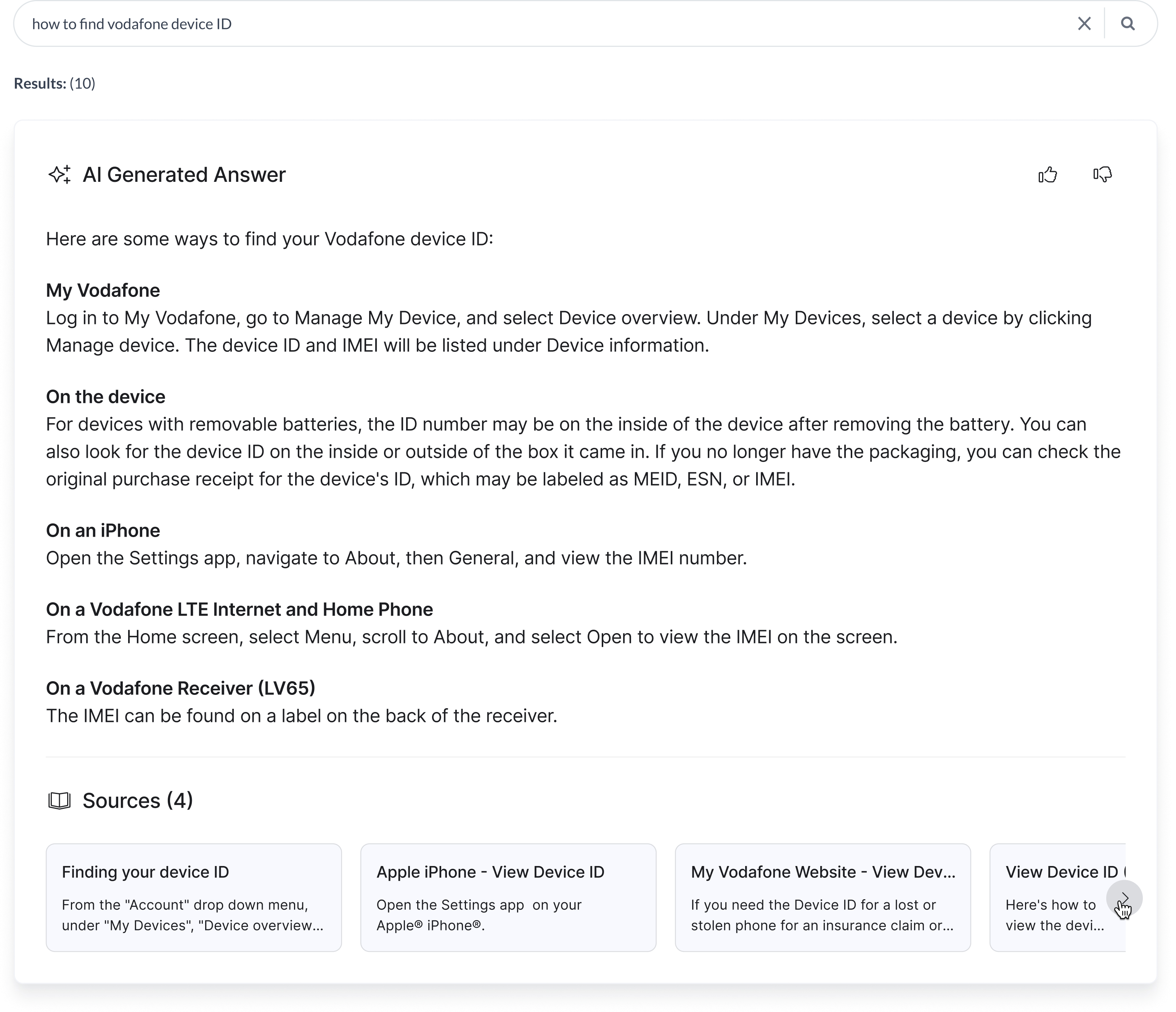
The problem: Yext Search returned links and snippets, while people now expected direct answers. For businesses, a direct AI answer raised harder questions: where did it come from, and who’s accountable for what it says on their behalf?
The call: Put a generated answer above the results, with its sources always visible, so people get a direct answer and can still check it. Answers default to a short summary that expands for detail, with a thumbs up or down to signal quality. We tested early concepts with four enterprise customers across industries.
What shipped: Generative answers with sources and feedback, live for end users. The business side, where teams would review and control answers before they went out, was designed but deprioritized when priorities shifted. So the end-user experience had to earn trust on its own, and showing sources did that work.
Impact: About $1.5M in upsell, and about 20% fewer searches per session, because people found answers faster.

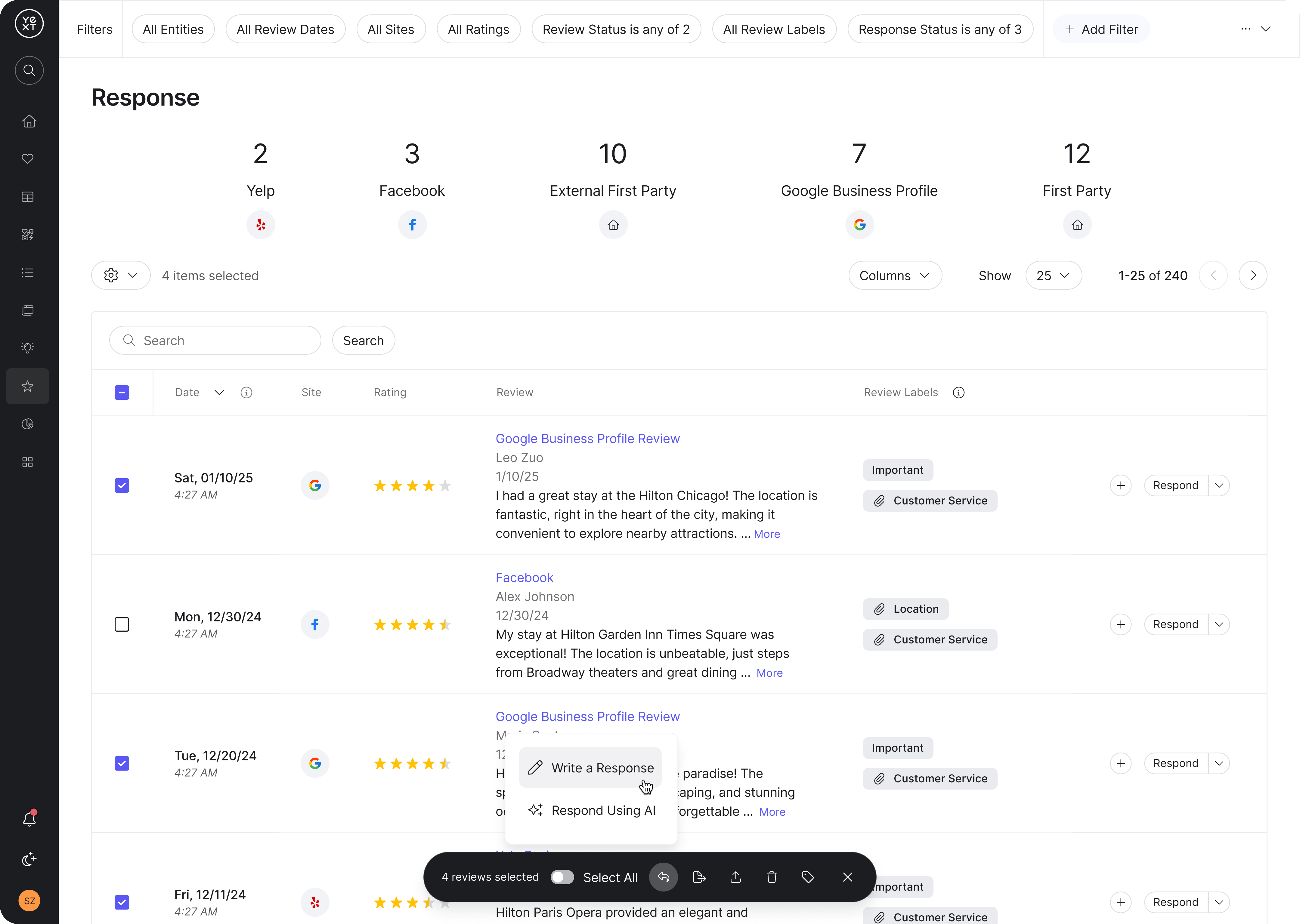
The problem: Yext Reviews had been in market since 2016 without a way to respond to reviews in bulk. For brands with hundreds or thousands of locations, answering one by one across Google, Yelp, and Facebook didn’t scale, and the gap was becoming a renewal risk.
The call: I split the work into two milestones. Milestone 1 shipped manual and template-based bulk responses right away, to unblock renewals and close deals. Milestone 2, AI-assisted responses, was designed as the next step. Doing both at once would have kept customers waiting.
What shipped: Bulk selection using the design system’s existing bulk-action bar, responses written from scratch or from approved templates, a preview before applying, and automatic distribution across templates, so a brand’s replies don’t all read the same.
What it cost: AI assistance waited for the next milestone.
Impact: 1.31M more reviews answered (+14.6%), and 64.6% faster average response time.
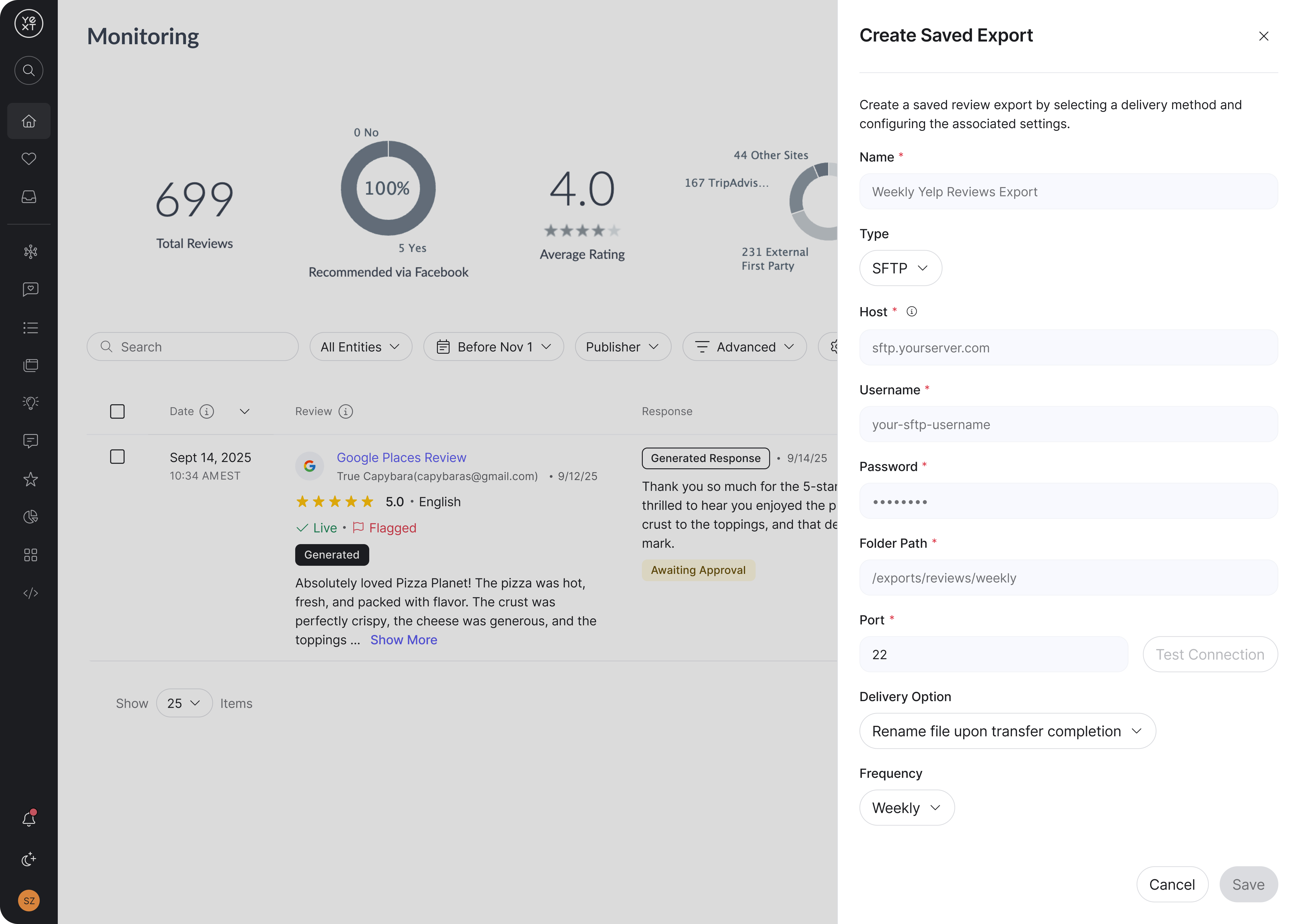
The problem: Enterprise and franchise brands needed to get review data to regional teams and franchise owners who don’t use Yext. Without a native option, they relied on slow, error-prone spreadsheets. The gap became a renewal blocker for one of Yext’s largest Reviews customers.
The call: Build a native export, not point customers to the API. An API existed, but customers told us it was built for technical users, and the people setting up these exports often weren’t.
What shipped: Exports by SFTP, FTP, or email, scoped to specific franchises or location groups and sent on a schedule. A test-connection step catches setup errors before saving, and a management view shows when each export last ran, who created it, and lets teams run, edit, or turn it off.
What it cost: Another delivery path for Yext to support, alongside the API.
Impact: Launched in 2026, closing the gap behind a renewal blocker for one of Yext’s largest Reviews customers.
Co-designed with another designer. I worked on both the design and the concept.
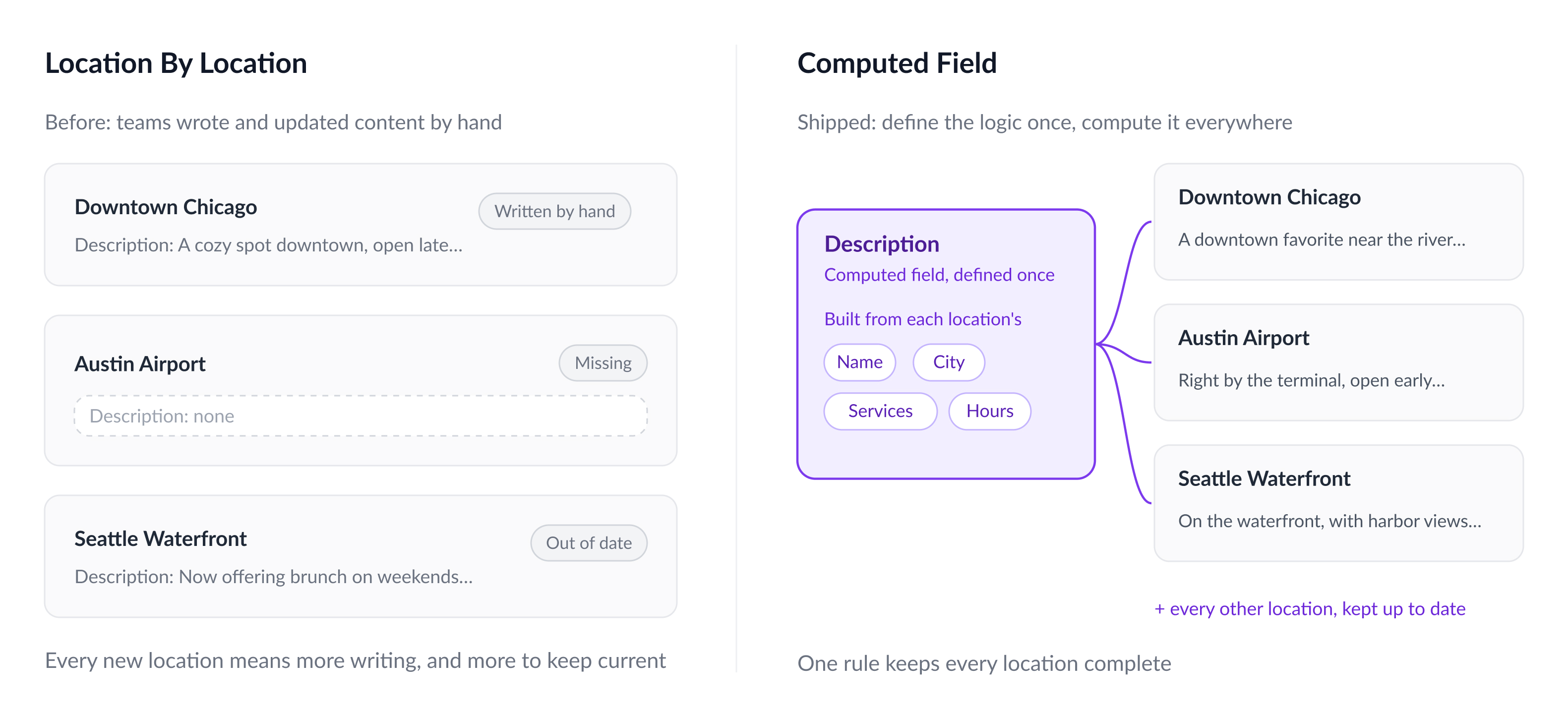
The problem: Brands keep business data for thousands of locations in Knowledge Graph, and keeping content complete, like a description for every location, took huge manual effort. As LLM APIs arrived, customers wanted to generate that content from data they already maintained, but there was no safe, scalable way to do it in the platform.
The call: Let teams define the logic once, at the field level, and compute values across every entity, instead of writing or generating content location by location.
What shipped: Computed field values, now part of Yext’s content generation features.
Impact: It turned Knowledge Graph from a place that stores data into one that keeps content up to date. The work earned a granted patent for automatically computing and updating field values based on relationships within the graph.
Unblock first, then extend. Shipping the smallest useful version, like bulk responses before AI, kept deals moving without closing off the bigger idea. And build for who actually uses it: the people receiving review data were franchise owners outside Yext, and the people setting up exports weren’t developers. A native export fit both, and the API fit neither.
Set up success measures from day one. Two of these four launched without a clear way to show their results, so their value is harder to prove than it should be.